Monotasking
Sometimes a treatment simply won’t hold, or the results of a treatment just don’t make any sense. There is often a reason for this, which if detected, can be resolved quickly.
The "CPU Overload" Analogy
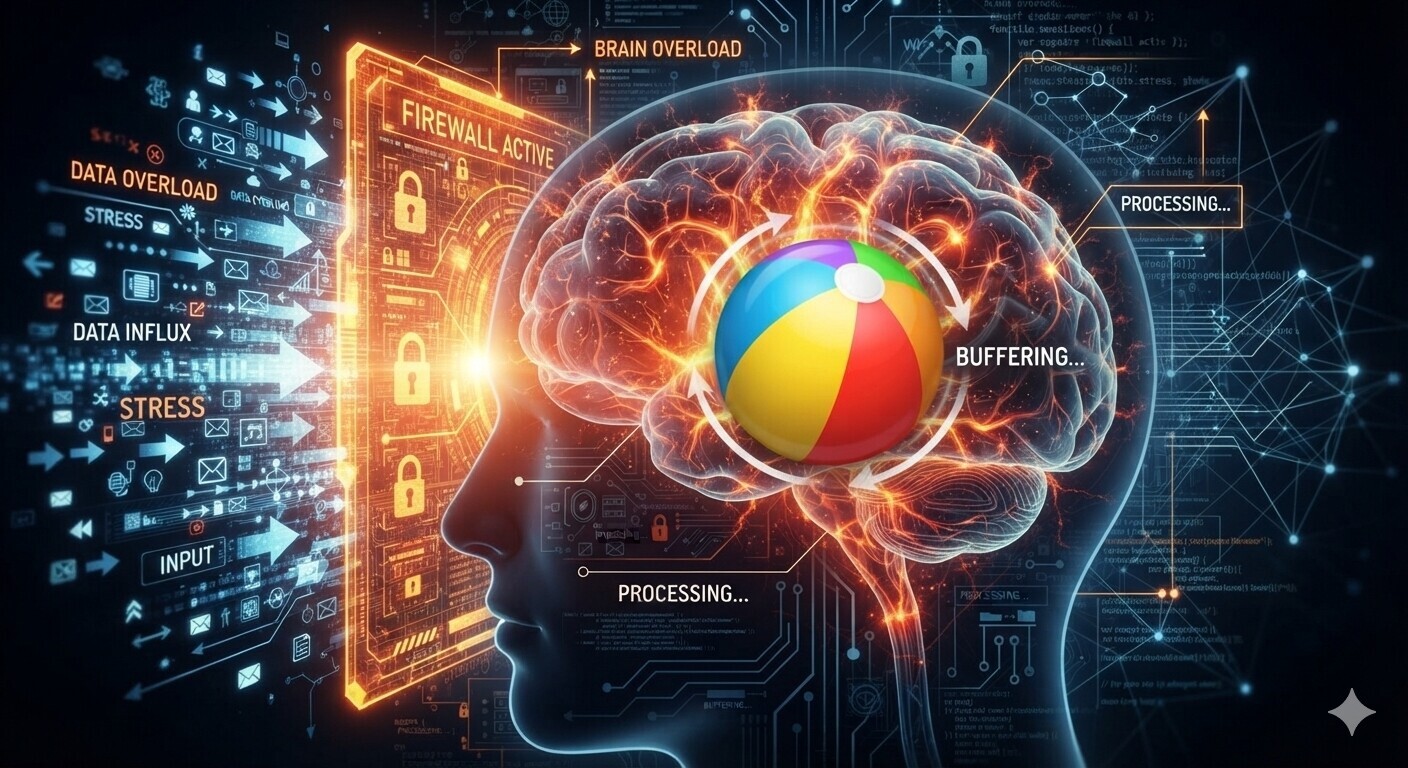
Conscious movement is like a heavy piece of software (like SolidWorks or Photoshop). Sometimes there is just too much input going in and your brain’s "central processing unit" (CPU) is using 95% of its energy just to maintain balance and manage old compensations.When we ask your brain to do two or three conscious movements at once, it’s like trying to run multiple high-demand programs on an old computer. The system simply runs out of RAM, the 'circle of death' (the dreaded Mac beachball) appears, and it simply stops saving new data—which is why the treatment doesn't 'stick.'"
The "Buffer" Concept
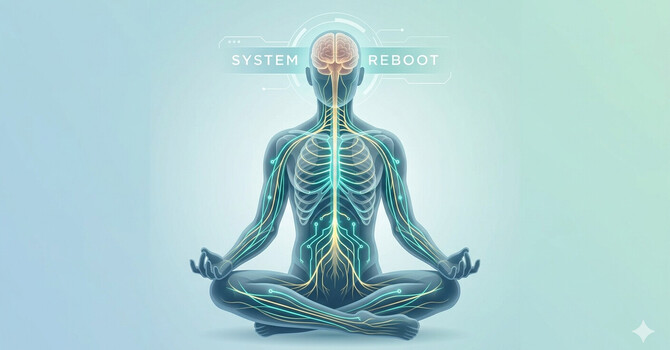
P-DTR is all about sensory input. When you’re in overwhelm, your nervous system's "buffer" is very small.Your brain is so focused on managing existing sensory 'noise' that it has no room to process new signals. If we give it more than one task, the buffer overflows. To get these neurologic changes to lock in, we have to respect your system's current speed and work in 'Safe Mode'—one task at a time—until we clear enough background noise for your bandwidth to increase.
The "New Habit" Toll
Conscious movement requires significantly more metabolic energy than subconscious movement.Think of your nervous system like a battery. In this state, your battery is drained from dealing with old injury patterns. Learning a new way to move is 'expensive' for your brain. If we do too much, the battery hits 0%, and the system shuts down to protect itself, losing any progress we just made. We need to move slowly so your brain feels safe enough to 'save' the file.
Fixing The Problem
Using PDTR, the practitioner can identify and rewrite this overload issue, resulting in your being able to perform 5 to 7 conscious tasks without overwhelming your nervous system, and more importantly, the patient’s nervous system now being able to hold onto the results from their treatment.
The Steps We Take
We Add One Task At a Time
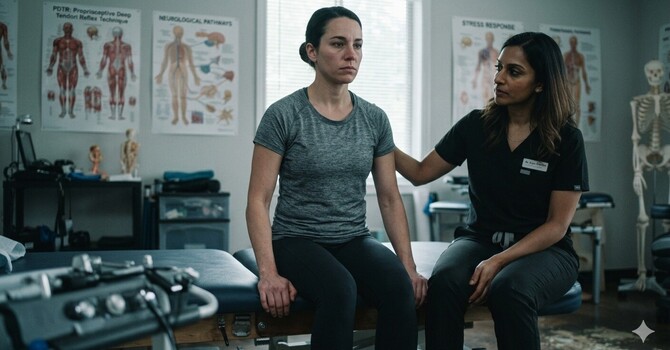
In PDTR protocols, I will have the seated patient perform one specific muscle test, such as a Deltoid isolation test (Straight arm up and forward, then hold). If they can do that and the muscle is able to "lock" properly, I will add another totally different "task" such as holding a Teres Minor muscle test (arm is bent and swings outward). This is Two tasks. If still "strong" then I'll have them make a fist with one hand (along with the two other muscle tests). Then wiggle the fingers on the other hand (also along with the other three tasks), then tap the feet, then turn the head and finally (seven tasks) count up by 3's.
If the patient can perform 5 to 7 of these concurrently, then they are effectively able to "Multi-TasK" and we are good to move forward with our PDTR treatment.
But if they are not, then we need to stop and fix whatever is disrupting and overwhelming the nervous system before proceeding.
The "Overactive Firewall"
Understanding Your Raised Threshold
Have you ever tried to log into a website and been blocked by a security system that asks you to identify ten different fire hydrants just to prove you’re a human? It’s frustrating, slow, and makes even the simplest task feel like a chore.When your body has dealt with excessive pain or constant "glitchy" feedback from an old injury, your brain develops a Raised Threshold. Essentially, it has installed an overactive firewall.
The Problem: Because your system has been "hacked" by pain in the past, it no longer trusts the signals coming from your muscles and joints. It sets the security bar so high that it requires a massive amount of "evidence" just to allow a simple movement to happen.