Myofascial Decompression is the modern application of cupping from Traditional Chinese Medicine.
Dr. Cohen studied this technique from Dr. Christopher DaPrato, DPT, the innovator of this technique, at UCSF Orthopedics & Physical Therapy. Dr Jenn is also trained in Cupping techniques.
Myofascial Decompression (MFD) — often referred to simply as "cupping" — is a modern, movement-based therapy that uses negative pressure to lift and release restricted fascia, rather than compressing it the way massage or soft tissue work typically does. Dr. Cohen studied MFD directly under Dr. Christopher DaPrato, DPT, the physical therapist who developed and refined the technique, at UCSF Orthopedics & Physical Therapy. Dr. Jenn is also trained in cupping techniques.
What Is Myofascial Decompression (MFD)?
Both Dr Cohen & Dr Jenn are trained to do cupping.
MFD is built on two combined principles: increasing fascial flexibility and neuromuscular re-education. Rather than pushing into tight or restricted tissue the way most manual therapies do, MFD uses cups to create negative pressure that lifts the skin and underlying fascia. When collagen fibers have become fibrotic and lack good blood flow, lifting the tissue rather than compressing it can be more effective at restoring mobility and circulation to the area.
How MFD Differs from Traditional Chinese Cupping?
Cupping has roots in Traditional Chinese Medicine, where cups are typically placed along energy meridians. MFD takes a different approach: cups are placed over specific areas of fascial restriction — identified through assessment, not fixed meridian points — and treatment incorporates active movement. While the patient holds the cups in place, they perform specific motions relevant to their injury or restriction, allowing the muscle and fascia to glide and reset underneath. This combination of decompression plus active movement is what distinguishes MFD from more passive cupping approaches.
UCSF's Role in Developing and Studying MFD
Dr. DaPrato developed MFD first in Colorado and later refined it at UC Berkeley before it became a technique taught and studied at UCSF's Department of Physical Therapy and Rehabilitative Science. He's treated professional and NCAA athletes at UCSF and UC Berkeley, teaches in UCSF's orthopedic residency program, and trained Olympic trainers and physical therapists ahead of the 2016 Rio Games in this technique. A 2020 study published in the International Journal of Sports Physical Therapy examined MFD's effects on hamstring tissue, adding to the small but growing body of research on the approach.
Conditions Myofascial Decompression May Help With MFD
- Chronic muscle tightness and restricted mobility
- Scar tissue and fascial adhesions
- Trigger points and muscle knots
- Sports-related overuse injuries
- Areas of poor circulation or stalled healing
- Postural restrictions tied to fascial tightness
What to Expect During a Session
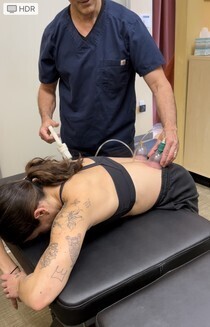
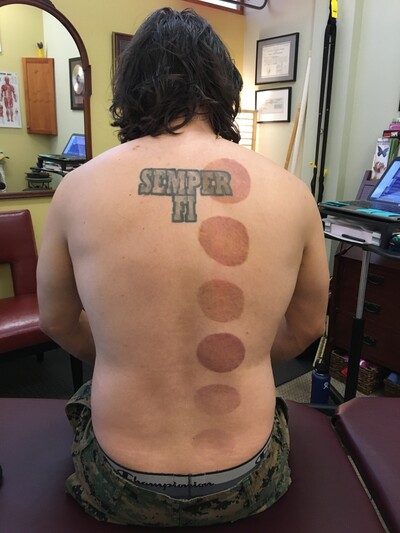
Cups are applied to the treatment area to create gentle suction, lifting the skin and fascia rather than compressing it. Depending on the area and goal, you may be asked to move through specific motions while the cups are in place — for example, cat/cow movements for the low back, or a throwing motion for the shoulder — to help the muscle and fascia glide and reset. Mild redness or discoloration in the treated area is common and typically fades within a few days; unlike a bruise, this doesn't reflect tissue damage.
Why Choose Dr. Cohen for MFD?
Dr. Cohen trained directly under Dr. Christopher DaPrato at UCSF — the physical therapist who developed MFD and continues to teach it to orthopedic residents and Olympic-level trainers. Both Dr. Cohen and Dr. Jenn are trained in cupping techniques, and MFD is often combined with Kinesiology Taping (RockTape) to reinforce the fascial release between visits.
Cupping (Myofascial Decompression) is one of several myofascial release techniques Dr. Cohen uses at Innate Chiropractic. See how it fits alongside ART, fascial scraping, shockwave therapy, and kinesiology taping on our Myofascial Release page.
Frequently Asked Questions about Cupping
Not exactly. Both use negative pressure, but MFD focuses on specific areas of fascial restriction identified through assessment rather than traditional meridian points, and it incorporates active patient movement, which traditional cupping typically doesn't.
Yes, mild redness or discoloration in the treated area is common and usually fades within a few days. Unlike bruising from an injury, this doesn't indicate tissue damage.
Most patients describe it as an intense stretch or pulling sensation rather than pain. Pressure is adjusted based on your comfort level.
Massage generally works by compressing tissue. MFD works in the opposite direction, using negative pressure to lift and decompress fascia, which can be more effective for tissue that's already tight and under-perfused.
Yes. Dr. Cohen often combines MFD with Kinesiology Taping (RockTape), chiropractic adjustments, or ART to support and extend the release between visits.
MFD is a newer technique, and research is still limited compared to more established therapies, but it has been studied at UCSF's Department of Physical Therapy and Rehabilitative Science, and at least one peer-reviewed study has examined its effects on hamstring tissue.
Yes. MFD falls under the umbrella of myofascial release, which is billed under the insurance code 97140.
Book a consultation with Dr. Cohen or Dr. Jenn to determine whether MFD is a good fit alongside your current treatment plan.
Both Dr Cohen & Dr Tran are trained to do Cupping.
Ready to try Cupping?