KinEase Release Methods (Quick Release Technique) in Albany, CA
Trained Directly Under the Technique's Developer
Not every adjustment needs force behind it. KinEase Release Methods (KRM) — also referred to as Quick Release Technique — is a gentle, low-force system that guides the body into a position of comfort until it "forgets" a painful holding pattern of muscle or joint tension, allowing the nervous system to down-regulate on its own, rather than being pushed into place. Dr. Cohen studied directly under Dr. Ethan Feldman, the chiropractor who developed the technique, training with him both in Berkeley and at his practice in Mexico.
What Is KinEase Release Methods?
KRM is a variation of Jones Strain-Counter Strain, an established osteopathic technique, refined specifically for chiropractic use. Rather than manipulating a joint directly, KRM works by finding a position where a painful or restricted area is placed into comfort — literally the position of "ease" the technique is named for. Held in that position, the muscle spindles (the sensory receptors that regulate muscle tension) reset, allowing tension, spasm, and pain to release without force, pressure, or manipulation of the affected area itself.
How KRM Works
The technique is built around a concept called the muscle spindle reflex. When a muscle or joint has been guarding against pain or injury, it can get "stuck" signaling tension even after the original cause has resolved. By locating and holding a joint or muscle in a specific position of comfort, KRM allows that faulty signal to reset — essentially rebooting the tissue back to its normal resting length and tone. Because the area of dysfunction isn't directly pushed, pulled, or forced, this makes KRM one of the gentlest adjusting techniques Dr. Cohen offers.
Who KRM Is a Good Fit For
Patients who find traditional adjustments too intense or uncomfortable
Older adults or anyone with more fragile joints or bone density concerns
Patients in acute pain who can't tolerate more forceful manipulation
Anyone looking for a calming, low-stress approach to chiropractic care
Cases where guarding or muscle spasm is limiting how much other treatment the body can tolerate
Conditions KRM May Help With KRM
- Acute muscle spasm and guarding
- Chronic tension patterns that haven't responded to other treatment
- Joint restriction with significant pain or sensitivity
- Neck and back pain where more forceful adjusting isn't appropriate
- Stress-related muscular tension
What to Expect During a Session
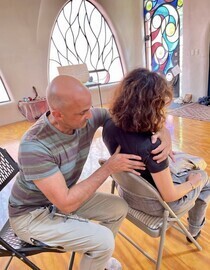
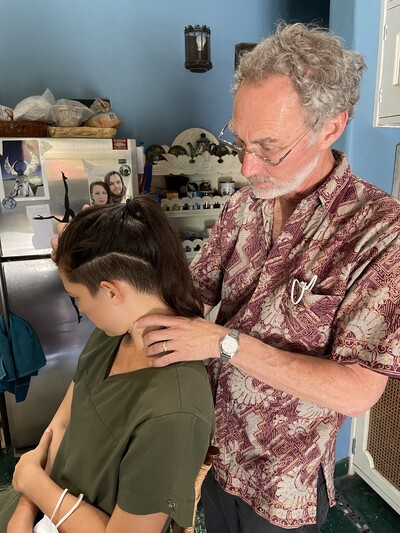
Dr. Cohen will locate the area of restriction or pain, then gently guide the body into a position where that discomfort eases or disappears entirely. That position is held briefly — typically a matter of seconds to a couple of minutes — allowing the nervous system to reset. There's no popping, cracking, thrusting, or forceful pressure involved. Most patients describe the experience as calming, and many notice an increase in range of motion and a decrease in pain immediately following treatment.
Why Choose Dr. Cohen for KRM in Albany
Why Choose Dr. Cohen for KRM in Albany
Dr. Cohen trained directly with Dr. Ethan Feldman, the developer of KinEase Release Methods, both in Berkeley and in Mexico. That direct, one-on-one training under the technique's creator is a level of instruction not every KRM-certified provider has. Combined with his broader training in PDTR, AK, and NET, Dr. Cohen can bring this gentle approach into a care plan for patients who need or prefer a lower-force option.
Frequently Asked Questions about KRM
No. Traditional adjustments typically use a quick, targeted thrust to a joint. KRM is a low-force technique that works by gently positioning the body into comfort and holding that position, without any thrusting or popping.
No, quite the opposite. KRM is designed to be calming and comfortable — it works by finding a position of ease, not by pushing into pain.
Yes. Dr. Cohen refers to this technique by both names — they describe the same gentle, low-force approach. The naming process has shifted as the technique continues to be finessed by Dr Feldman.
KinEase Release Methods was developed by Dr. Ethan Feldman. Dr. Cohen trained with him directly, both in Berkeley and at Dr. Feldman's practice in Mexico.
Yes. It's a variation of Jones Strain-Counter Strain, a well-established osteopathic technique, adapted specifically for chiropractic use.
It's a good option for patients who prefer a gentler approach, have more fragile joints, are in acute pain, or simply don't tolerate more forceful adjusting well.
Yes. Dr. Cohen often uses KRM alongside PDTR, AK, or NET as part of a broader treatment plan, especially when a patient needs a gentler starting point.
Yes. Since KRM falls under the same umbrella as other adjusting techniques, we use the billing code 98940-41 for it.
Book a consultation with Dr. Cohen to discuss whether KRM is a good fit for your condition and comfort level.
Ready to try Gentle Chiropractic Care?