What Is P-DTR®?
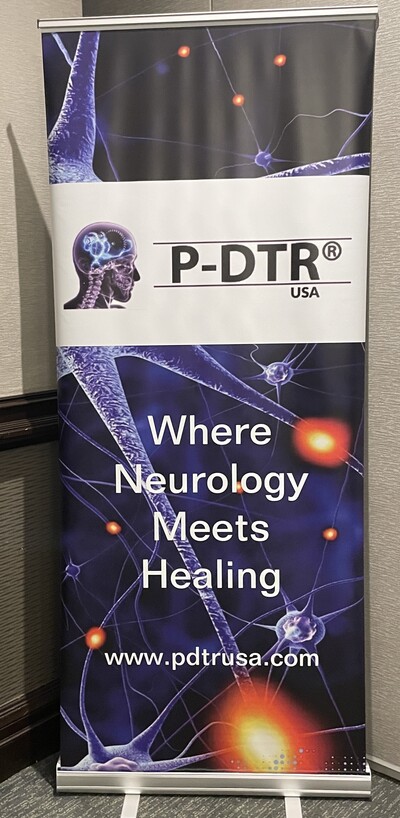
P-DTR® (Proprioceptive Deep Tendon Reflex) is a functional neurology technique developed by spinal orthopedic surgeon Dr. José Palomar. It identifies and corrects dysfunctional neurological receptors — the sensory "light switches" found throughout your muscles, joints, tendons, and fascia — that are sending incorrect signals to your brain.
When these receptors malfunction, the result is corrupted communication between your body and your central nervous system. This can manifest as chronic pain, weakness, poor coordination, or movement dysfunction — even long after the original injury or trauma has physically healed.
P-DTR® works by locating these aberrant receptors and resetting them through targeted stimulation, restoring accurate sensory input and allowing the nervous system to coordinate proper motor function again.
How is P-DTR® Different from Conventional Chiropractic Care?
Traditional chiropractic care focuses on structural alignment — adjusting joints and releasing tight muscles to restore mechanical function. P-DTR® adds a neurological layer to that work.
Rather than treating only where it hurts, P-DTR® asks why the dysfunction is occurring at the neurological level. Many patients who have plateaued with other treatments — physical therapy, massage, conventional chiropractic — find that P-DTR® addresses the root cause that was being missed.
A helpful analogy is that of software vs hardware. P-DTR® rewrites the software messaging from body to brain where chiropractic adjustments and soft tissue release techniques serve as the tweeks to the hardware itself.
P-DTR® is often used in combination with chiropractic adjustments, Active Release Technique (ART), and other modalities at Innate Chiropractic to produce faster, more lasting results.
Conditions Treated with P-DTR®
P-DTR® has proven effective for a wide range of musculoskeletal and neuromuscular conditions, including:
- Chronic pain — persistent pain that has not resolved with conventional treatment
- Neck and back pain — including pain stemming from disc issues, muscle imbalances, or old injuries
- Sciatica — by restoring proper firing patterns in the piriformis and surrounding musculature
- Sports injuries — muscle strains, tendon dysfunction, and post-injury neuromuscular compensation patterns
- Plantar fasciitis — including gravity-sensitive receptor dysfunction in the foot and ankle
- TMJ (jaw pain) — temporomandibular dysfunction driven by neuromuscular imbalance
- Tennis elbow and golfer's elbow — lateral and medial epicondylitis with a neurological component
- Post-surgical dysfunction — cases where tissues have healed but neuromuscular patterns have not normalized
- Movement dysfunction and compensation patterns — asymmetrical strength, coordination deficits, and chronic muscle inhibition
What to Expect During a P-DTR® Session
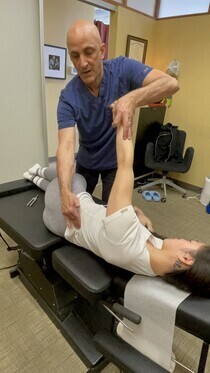
A P-DTR® assessment begins with muscle testing — a precise diagnostic tool used to identify which receptors are not communicating correctly with the nervous system. Once a dysfunctional receptor is identified, Dr. Cohen applies a specific stimulation technique to reset it, and the change in muscle function is immediately re-tested to confirm the correction.
Sessions are hands-on, non-invasive, and typically integrated into a broader treatment visit that may include chiropractic adjustments, soft tissue work, or other techniques based on your specific presentation.
Many patients notice changes — in pain levels, range of motion, or muscle function — within a single session.
Dr Cohen's P-DTR® Training and Credentials
Dr. Stefan Cohen has been practicing P-DTR® since 2021. He has completed:
120-hour P-DTR® Foundations Series
80-hour P-DTR® Intermediate Series
This 200+ hours of post-graduate training represents a significant commitment to functional neurology and puts Dr. Cohen among a small number of practitioners in the East Bay offering this technique at this level of training.
Additionally, Dr Cohen has 200+ hours of Applied Kinesiology (AK) training and certification. AK is the foundation of much of PDTR while PDTR adds a scientific neurologic basis to this original system.
Dr Cohen is one of the Only Chiropractors in Albany, CA and one of a select few practitioners offering P-DTR® in the greater Bay Area.
Frequently Asked Questions (FAQ) about P-DTR®
P-DTR® stands for Proprioceptive Deep Tendon Reflex. It was developed by Dr. José Palomar, a spinal orthopedic surgeon who built on the foundations of Applied Kinesiology (AK) and Carrick Functional Neurology.
No. P-DTR® is a non-invasive, gentle technique. The assessment involves muscle testing and targeted receptor stimulation — there is no cracking, forceful manipulation, or discomfort.
This varies depending on the complexity and chronicity of your condition. Many patients experience meaningful improvement within 2–4 sessions. Chronic or long-standing conditions may require more visits to fully resolve layered neuromuscular dysfunction.
Yes — in fact, this is one of the most common presentations we see. P-DTR® addresses the neurological component of dysfunction that many other therapies don't specifically target. It's well-suited for patients who have partially improved but plateaued.
Yes. P-DTR® is frequently used to address post-surgical neuromuscular dysfunction — cases where the surgical repair was successful but the nervous system has retained dysfunctional patterns from the original injury or the surgical trauma itself.
AK uses muscle testing to identify imbalances across structural, chemical, and emotional systems. P-DTR® builds on this foundation but focuses specifically on the neurological receptors — the proprioceptors, nociceptors, and mechanoreceptors — and uses deep tendon reflex stimulation as the corrective tool. Dr. Cohen is trained in both.
P-DTR® is typically integrated into a chiropractic visit rather than billed as a separate service. Please contact our office to discuss your insurance situation — we're happy to help you understand your coverage.
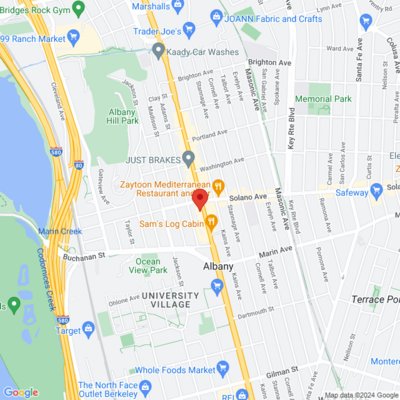
We are located at 916A San Pablo Ave., Albany, CA 94706, conveniently serving patients from Albany, Berkeley, El Cerrito, Richmond, and the surrounding East Bay area.
Ready to Experience P-DTR®?
If you're dealing with chronic pain, a sports injury, or a condition that hasn't fully resolved with other treatments, P-DTR® may be the missing piece.
New patients receive a 60-minute comprehensive evaluation. During your first visit, Dr. Cohen will take a thorough history, perform a functional assessment, and develop a treatment plan tailored to your specific needs.
Questions? Call or text us at (510) 528-5216 or email info@n8chiropractic.com
Also at Innate Chiropractic
P-DTR® is one of many advanced techniques we offer. Explore how we use it alongside:
- Active Release Technique (ART) — gold-standard soft tissue release
- Chiropractic Care — structural alignment and joint function
- Neuroemotional Technique (NET) — mind-body stress resolution
- Shockwave Therapy — accelerated healing for chronic pain and tendinopathy
Innate Chiropractic | 916A San Pablo Ave., Albany, CA 94706 | (510) 528-5216 Serving Albany, Berkeley, El Cerrito, Richmond, and the East Bay
Ready to Try PDTR?