Non-invasive Shockwave Therapy
Innate Chiropractic is proud to be a part of the Shockwave Centers of America network.
Both Dr. Stefan Cohen and Dr. Jenn Tran provide this treatment — bringing an advanced, non-invasive option for patients dealing with chronic pain that hasn't responded to other treatments.
Shockwave Therapy in Albany, CA
Fast, Non-Invasive Relief for Chronic Pain
Why Shockwave?
Some injuries and chronic pain conditions stop responding to rest, stretching, or standard treatment — the tissue essentially gets "stuck" in a low-grade, non-healing state. Shockwave Therapy is a non-invasive treatment designed to restart that healing process by delivering targeted acoustic waves directly into the affected tissue.
What Is Shockwave?
Shockwave is an acoustic wave which carries high energy to painful spots and myoskeletal tissues with subacute, subchronic and chronic conditions. The energy promotes regeneration and reparative processes of the bones, tendons and other soft tissues.Shockwaves are characterized by jump changes in pressure, high amplitude and non-periodicity.
How Does Shockwave Work?
Shockwave Therapy works by delivering focused acoustic waves deep into soft tissue. This creates controlled microtrauma that triggers a fresh inflammatory response — kickstarting the body's natural healing process, increasing blood flow, and stimulating the formation of new blood vessels in the treated area.
The kinetic energy of the projectile, created by compressed air, is transferred to the transmitter at the end of the applicator and further into the tissue.Acoustic waves with high energy peak used in Shockwave therapy interact with tissue causing overall medical effects of accelerated tissue repair and cell growth, analgesia and mobility restoration. All the processes mentioned in this section are typically employed simultaneously and are used to treat chronic, sub-acute and acute (advanced users only) conditions.
Common Chronic Conditions Treated With Radial Shockwave
- Tennis Elbow
- Golfers Elbow
- De Quervain ’ s Disease
- Trigger Finger
- Carpal Tunnel
- Plantar Fascitis
- Neuropathy
- Shoulder Calcific Tendonitis
- Achilles Tendinopathy
- Patellar Tendinopathy
- Sciatica
- Bones Spurs
What To Expect During A Session
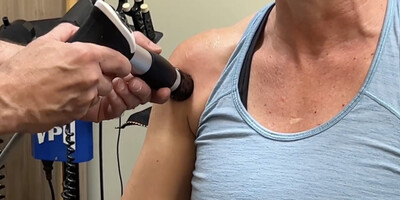
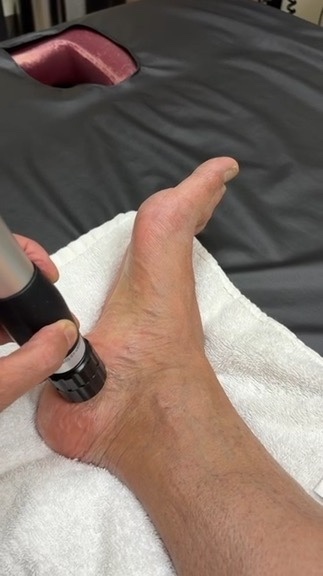
Treatment is delivered through a handheld device applied directly to the skin over the affected area — no incisions, needles, or anesthesia involved. Most patients feel a level of discomfort similar to deep tissue work, and sessions are brief. You can typically return to normal activity right after treatment. Because Shockwave Therapy works by prompting a healing response rather than providing instant relief, most chronic conditions benefit from a series of sessions rather than a single visit.
Why Choose Innate Chiropractic for Shockwave Therapy in Albany?
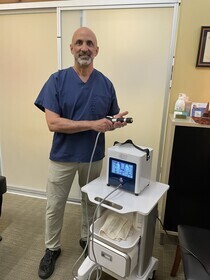
Both Dr. Cohen and Dr Tran are trained and certified to use Radial Shockwave Therapy. They often combine Shockwave with other techniques in their respective trainings to address both the tissue-level damage and any underlying structural or nervous system factors contributing to a patient's pain.
Shockwave Therapy is one of several myofascial release techniques Dr. Cohen uses at Innate Chiropractic. See how it fits alongside ART, cupping, fascial scraping, and kinesiology taping on our Myofascial Release page.
Frequently Asked Questions
This is your sub-headline
Most patients feel mild to moderate discomfort during treatment, similar to a deep tissue massage. Intensity can be adjusted throughout the session for comfort.
No. You can return to normal activities immediately after a session, though it's generally recommended to avoid strenuous exercise for 24 hours afterward. It is also recommended to avoid ice and anti-inflammatories, rather applying moist heat and gentle stretching following a treatment.
Most chronic conditions require a series of sessions, often spaced about a week apart, for the best results. Some patients notice improvement after the first session, but lasting results typically build over a course of treatment. These treatments can be as few as three to six while more stubborn chronic cases can take eight to 12 or more. Both Dr Cohen and Dr Tran however find that their approach of combining other treatment modalities speeds up the care process.
Yes. It's often used alongside chiropractic adjustments, PDTR, soft tissue therapy like ART, or other rehabilitative techniques to support a more complete recovery.
It tends to work especially well for chronic, stubborn conditions like plantar fasciitis, tendinitis, and calcific shoulder pain that haven't fully resolved with rest or standard treatment.
Yes, especially Radial Shockwave, which is the equipment we use in this office. it's a non-invasive treatment with minimal side effects for most patients. As with any treatment, Dr. Cohen & Dr Tran will confirm it's appropriate for your specific condition before starting.
Radial shockwave devices (also called Radial Pressure Wave Therapy or RPWT) are primarily classified as FDA Class I Medical Devices in the United States. Because they utilize a pneumatic or ballistic mechanism that disperses energy superficially rather than focusing high-energy acoustic waves deep inside the body, regulators consider them lower-risk than true focused shockwave systems. Class I (Low Risk): Most standalone radial pressure wave devices fall under this category. They present minimal risk, have simple regulatory controls, and do not require comprehensive pre-market clinical trials to verify efficacy before sale.
Generally not, though many offices in other states, Canada and Europe report insurance covers this procedure.
Book a consultation with Dr. Cohen or Dr Tran to determine whether Shockwave Therapy is the right fit for your condition, alongside or instead of other techniques he offers.
Both Dr Cohen & Dr Jenn are trained & certified in Shockwave Therapy.
Ready To Try Shockwave Therapy?