What Is Applied Kinesiology (AK)?
Precision Diagnosis Through Functional Muscle Testing
Applied Kinesiology (AK) is a diagnostic system that uses muscle response testing to uncover structural, chemical, and energetic imbalances in the body — even ones that don't show up clearly through standard exams. Dr. Cohen has over 200 hours of training in AK and is a Board Certified AK practitioner through the International College of Applied Kinesiology (ICAK). He uses the technique to guide exactly where to treat and which technique will be most effective for each patient at Innate Chiropractic in Albany.
What Is Applied Kinesiology?
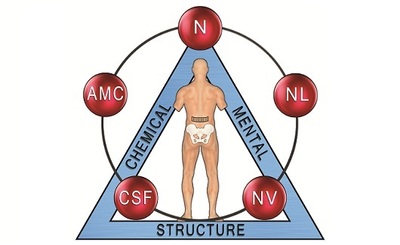
AK is a holistic assessment and treatment approach that integrates ideas from chiropractic, mind-body medicine, nutrition and traditional Chinese medicine (Structure, Chemistry & Emotion). It was developed in the 1970s by Dr. George Goodheart, the first chiropractor to work with a U.S. Olympic team. Rather than relying on symptoms alone, AK practitioners use manual muscle testing to evaluate how the body's structural, chemical, and emotional systems are functioning — and where they may be out of balance.
How AK Muscle Testing Works
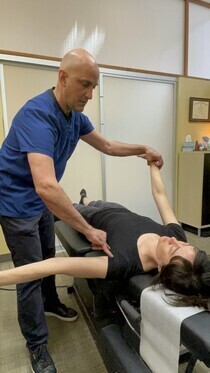
During an AK evaluation, Dr. Cohen tests the strength and response of specific muscles to identify imbalances that may be contributing to your symptoms. A muscle that "weakens" under a specific test can point to problems ranging from a joint misalignment, to a nutritional deficiency, to an unresolved stress pattern — information that shapes the treatment plan rather than relying on guesswork.
What AK Can Help identify
- Structural imbalances contributing to pain or restricted movement
- Nutritional or chemical factors affecting recovery
- Areas where the nervous system isn't communicating properly with muscles
- The most effective treatment approach for your specific case, whether that's chiropractic adjustment, soft tissue work, PDTR, or nutritional guidance
AK Is the Foundation Behind PDTR
If you're familiar with PDTR (Proprioceptive Deep Tendon Reflex), one of Dr. Cohen's core specialties, it's worth knowing that AK's muscle-testing principles are part of the foundation PDTR was later built on. Dr. Cohen's AK training gives him an especially precise diagnostic lens, which he brings directly into how he applies PDTR and other techniques during your visit.
What to Expect During an AK Session
AK assessment is non-invasive and typically integrated directly into your regular visit rather than requiring a separate appointment. Dr. Cohen will test relevant muscle groups, note where imbalances show up, and use those findings to decide on the most effective treatment for that day — whether that means a chiropractic adjustment, targeted soft tissue work, or another technique from his training.
Why Choose Dr. Cohen for Applied Kinesiology in Albany
Dr. Cohen's ICAK Board Certified with over 200 hours of course work. This means his AK training meets a recognized national standard, not just a weekend course. Combined with 26+ years of clinical experience and additional training in PDTR, ART, and NET, AK allows him to pinpoint the actual driver of a patient's symptoms rather than just treating where it hurts.
Frequently Asked Questions about ART
AK is primarily a diagnostic tool. Dr. Cohen uses it to identify the structural, chemical, or nervous-system imbalances contributing to a patient's symptoms, which then guides the treatment approach he uses.
No. Traditional chiropractic focuses on spinal and joint alignment. AK is a broader diagnostic system that can point to nutritional, structural, or nervous-system factors, and often informs which specific technique — adjustment, PDTR, soft tissue work, etc. — will be most effective.
Manual muscle testing is a clinical assessment tool used across several disciplines, including AK, NET, and PDTR. There are more valid and less valid uses of muscle testing across many fields, ranging from "yes/no" testing (invalid) to muscle-specific orthopedic muscle testing (valid). Dr. Cohen uses muscle testing as one diagnostic input among several, not as a stand-alone test, to help direct treatment decisions.
No. Muscle testing is gentle and non-invasive — it involves light resistance against specific muscle groups, not manipulation or pressure on painful areas.
AK's muscle-testing approach is part of the historical foundation that orthopedic spinal surgeon and AK diplomat Jose Palomar utilized to develop PDTR. Dr. Cohen's AK training strengthens the precision of his PDTR work.
Usually not — AK assessment is typically built directly into your regular visit rather than requiring its own appointment.
AK is most useful as a diagnostic tool for pain, movement restrictions, and cases where standard treatment hasn't fully resolved symptoms — helping identify what's actually driving the issue.
Usually not. However, Dr Cohen folds his analysis and treatment methods together, utilizing AK and PDTR as well as chiropractic adjustments, myofascial release technqiues, rehab techniques, posture and ergonomics, and codes his treatments to best describe the treatment provided, keeping in mind what insurance companies are also looking for in a superbill.
Ready to Try AK?