



The Human Foot Was Never Meant for Concrete: The Neurologic Revolution in Orthotics
Our feet are masterpieces of evolutionary engineering. For millions of years, they adapted to walk barefoot across ever-changing, uneven natural terrain like dirt, rocks, sand, and grass. Every step over a bump or a slope forced the brain to micro-adjust muscles throughout the entire body to maintain balance and posture.
Today, we live in a completely flattened world. We spend our lives walking on rigid concrete, hardwood, and asphalt. To cope, we trap our feet inside thickly padded, highly supportive shoes, or we stack rigid and semi-rigid orthopedic inserts inside them.
While traditional orthotics aim to mechanically support or "cast" a collapsing foot, they actually make the foot lazy. They do not help the foot adapt or improve over time; instead, they lock it into a static position, turning off the natural communication between the ground and your nervous system. At Innate Chiropractic, we are turning this traditional approach on its head with Better Balance Orthotics. Despite the name, these are not orthopedic orthotics — they are neurologic inserts.
But I didn't always see it this way. During my 4 years in chiropractic school and 26 years in practice, I trained with leaders in the field of gait and foot mechanics. I learned how to make in-house orthopedic orthotics, and how to take a foam mold of the foot in talar neutral so a lab can make a custom orthopedic device. I worked with local running stores that make custom insoles, and with podiatrists and orthopedists who use labs to make rigid orthopedic devices. I learned how to modify an existing orthopedic insole if the arch is too low or if the device isn't rigid enough and collapses under a person's weight, and how to cut a hole in an insole so that the big toe drops properly during push off. And I personally wore just about every possible insole out there.
But there is another side to this story. Over the past five years I learned how to see the body not just as a magnificent kinetic chain of bones, joints, muscle and fascia, but as a sophisticated feed-back network dependant on proper communication between all these structures and the central nervous system. And that's where my orthotic epiphany began.
The Flat-World Problem vs. Neurologic Stimulation
Traditional orthotics treat the foot like a broken structural beam that needs a permanent splint. Better Balance Orthotics treat the foot for what it actually is: your body's primary sensory organ for movement.
Instead of being hard and restrictive, these Neurologic Inserts are floppy, flexible, and distinctly bumpy. This intentional design replicates the experience of walking barefoot on natural, uneven ground.
The moment you step onto a bumpy, non-rigid neurologic insert—even if you are just standing completely still—your foot instantly wakes up. The tactile stimulation triggers a rapid, real-time conversation between the thousands of nerve endings in your soles and your brain, maximizing the "Foot-Brain Connection."
From the Ground Up: Re-engaging the Kinetic Chain
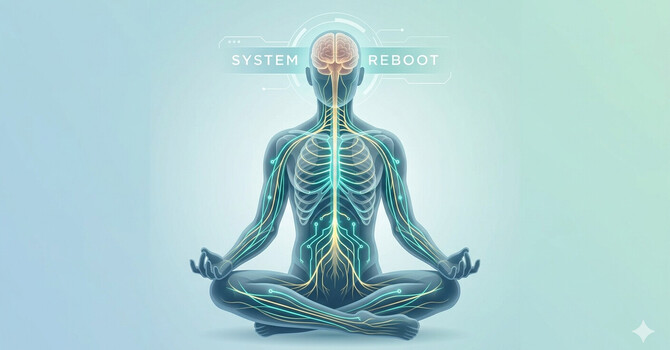
When your brain receives this rich sensory information from your feet, it triggers an immediate, systemic neurologic reset. It shifts your body out of a protective, stagnant posture and forces dormant muscle groups to fire back up.
Hip Flexor Activation: The brain recognizes the dynamic surface and immediately recruits the hip flexors to stabilize the pelvis, improving core strength and gait alignment.
Neck Flexor Alignment: Because the nervous system works as a continuous chain from head to toe, activating the feet re-engages the deep neck flexors, pulling the head back into a stacked, natural position over the spine.
Structural Realignment: By correcting the neurologic signaling first, the muscular and skeletal structures naturally follow suit.
Whether you are a middle-aged active adult looking to preserve your joints, an athlete striving for peak performance, a child developing proper gait patterns, or an elderly individual aiming to prevent falls, your nervous system runs on sensory information.
When your nervous system communicates properly with your environment, your body stops fighting against itself. You no longer rely on rigid plastic arches to hold you up; your own muscles do the work they were evolved to do.
The ultimate result of this neurologic awakening is a dramatic reduction in chronic pain, improved stability, and fluid, efficient movement. Neurologic Inserts don’t just cushion the symptoms of a flattened world—they rewire your connection to the ground beneath you.
With Neurologic Inserts, I find that balance improves, as does core stabilization. It seems that the threshold is raised as the volume from the feet to the brain is increased. Of course I also want to work with a patient to optimize the whole system by correcting the alignment of the spine and extremities (which includes the feet which each have 26 bones - more than the entire spine). I also work to correct movement patterns and corrupt neurologic feedback loops throughout the body. All of this is crucial for optimal living. But once this is done, the patient stands up and walks to the front of the office, and I want to do everything I can to ensure that loading the feet, ankles, knees, hips and spine don't confuse the system again! That's where Neurologic Orthotics come in.
Watch and Learn More!
Want to see this in action? Check out my video where I demonstrate how neurologic orthotics instantly correct how postural muscles fire when you stand on them.
If this Blog or Video makes you want to learn more, contact us to see if you are a good candidate for neurologic orthotics at www.n8chiropractic.com or call or text us at (510) 528-5216.