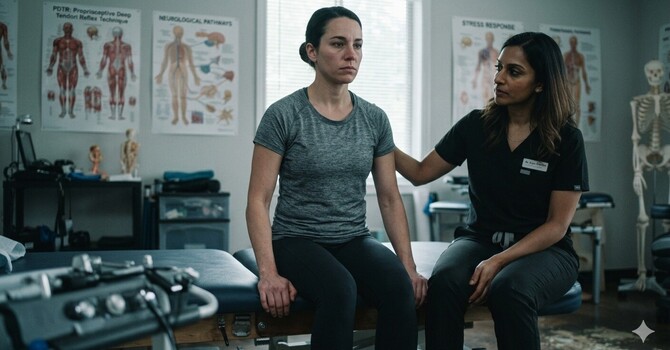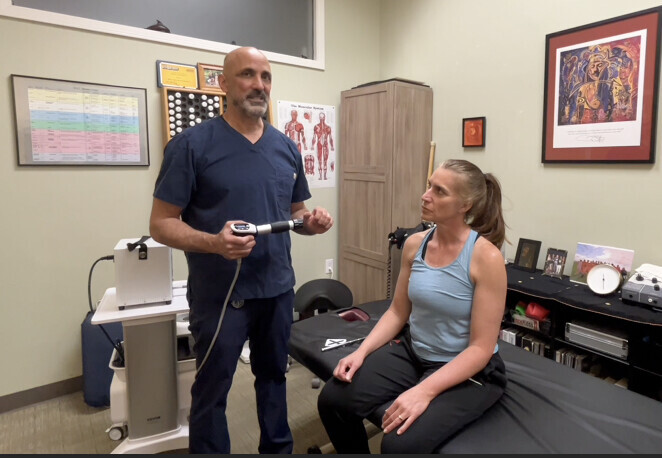
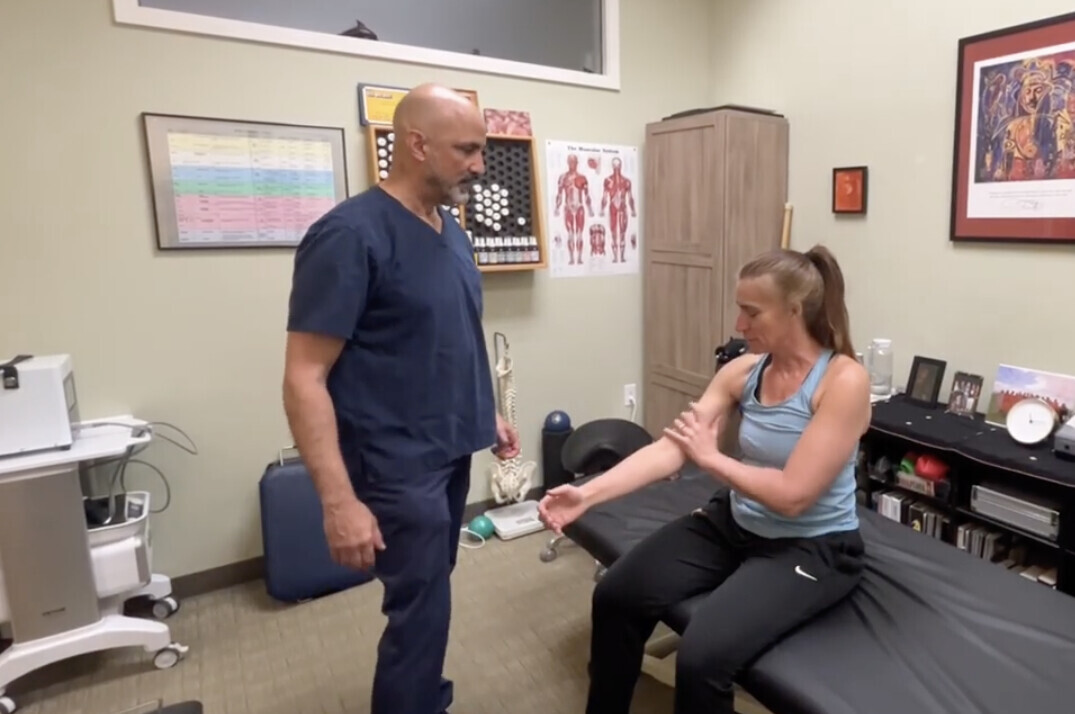
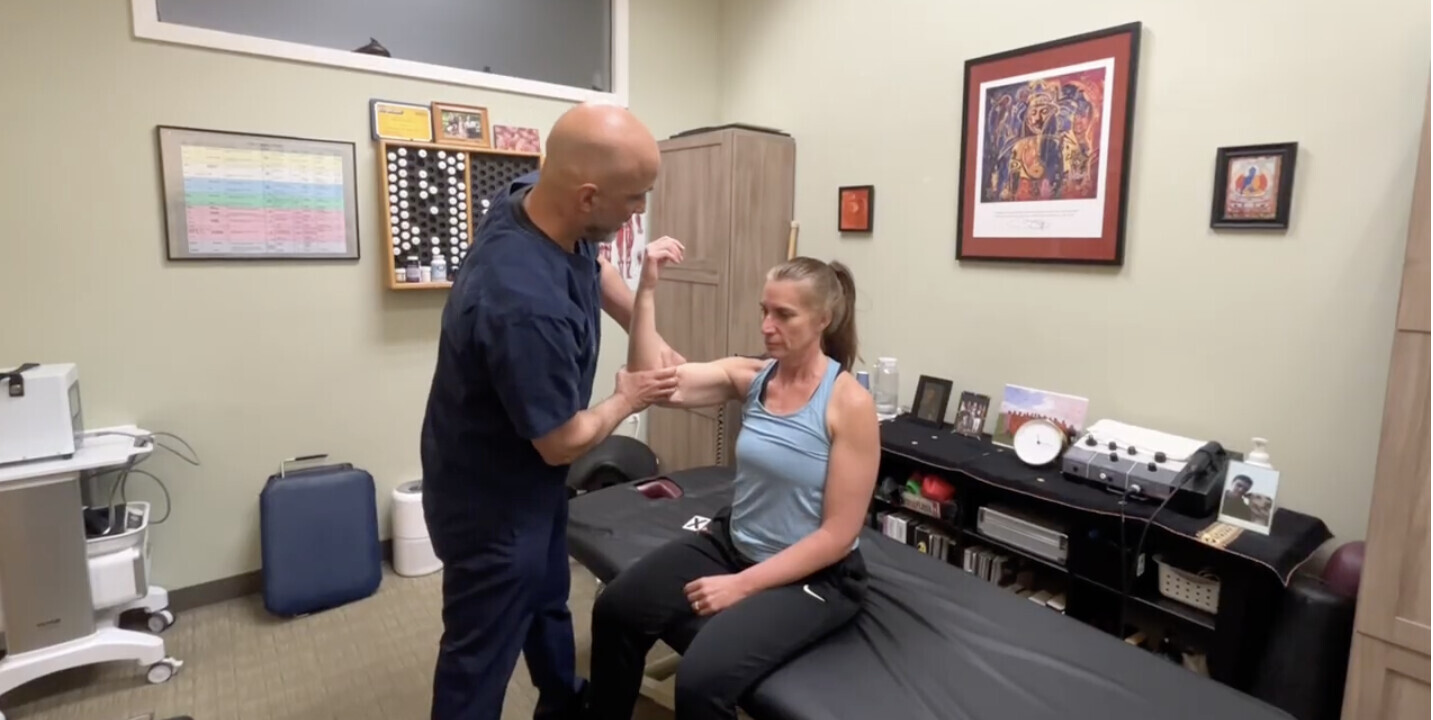
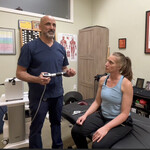
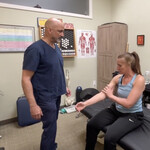
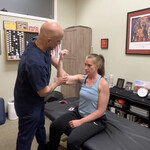
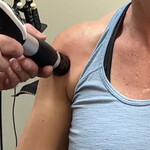
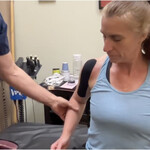
This blog demonstrates how I work with an athlete with a shoulder issue. But please note that you don't have to be an athlete to receive the same quality care! The patient in this video is a longtime triathlete who complains of shoulder pain when running or swimming backstroke.
1. Decoding the Nervous System: My Process with P-DTR
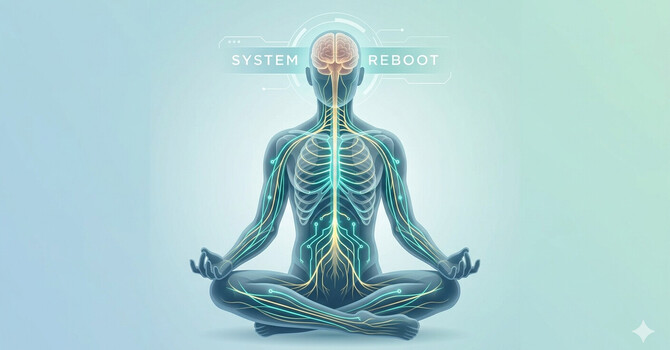
In my practice, I treat the body like a complex biological computer. To get the best results using Proprioceptive Deep Tendon Reflex (P-DTR), I follow a specific "debugging" protocol to ensure I’m working with the nervous system rather than against it.
a) Checking the Connection
Before starting, I must ensure the patient is "testable." This means verifying that their muscles respond accurately to specific stimuli. If there is too much "noise" in the nervous system, I’m effectively "locked out" of the network—much like hitting a firewall. In these cases, I have to back up, identify the source of the disruption (often a specific area where pain receptors are misfiring), and reset those sensors using P-DTR protocols before I can proceed.
b) Accessing the "Source Code"
Once the firewall is down, I have the patient initiate a specific movement—perhaps a simple neck rotation or a complex motion like a running stride. I think of this as hitting "Ctrl + Alt + Del" on a keyboard; it highlights the dysfunctional pattern within the nervous system.
By engaging this movement, I can "get into the system" to find the offending muscle or joint. This puts the patient into what I call Diagnostic Mode. Much like a programmer booting a PC into MS-DOS to rewrite code, this state allows me to access deeper neurological layers.
c)The Diagnostic State
Interestingly, the patient doesn't feel any different while in this mode. However, their neurology shifts: all isolated muscle tests will temporarily show "weak" until the dysfunctional pattern is resolved or I manually exit the diagnostic state.
d) The System Reset
By following the strict rules of P-DTR, I can effectively reprogram the software of the body. I identify overfiring or underfiring muscles and "reset" them, bringing balance back to the joints and fluid harmony to the patient's movement patterns.
2. Physical Hardware: Soft Tissue Release
While P-DTR addresses the "software" of the body, I also focus on the "hardware"—the muscles, fascia, and tendons. Depending on what we find during the neurological assessment, I may utilize several specialized techniques to release tight or bound-up tissues.
- Active Release Technique (ART): As a practitioner certified in Full Body ART, I utilize this "Gold Standard" pin-and-stretch method. It is incredibly effective for targeting specific muscles to restore normal glide and tension.
- Instrument-Assisted Soft Tissue Mobilization: I use Graston (beveled surgical steel tools) to expertly scrape and smooth out fascia, as well as Myofascial Decompression (cupping) to lift and decompress stagnant tissue.
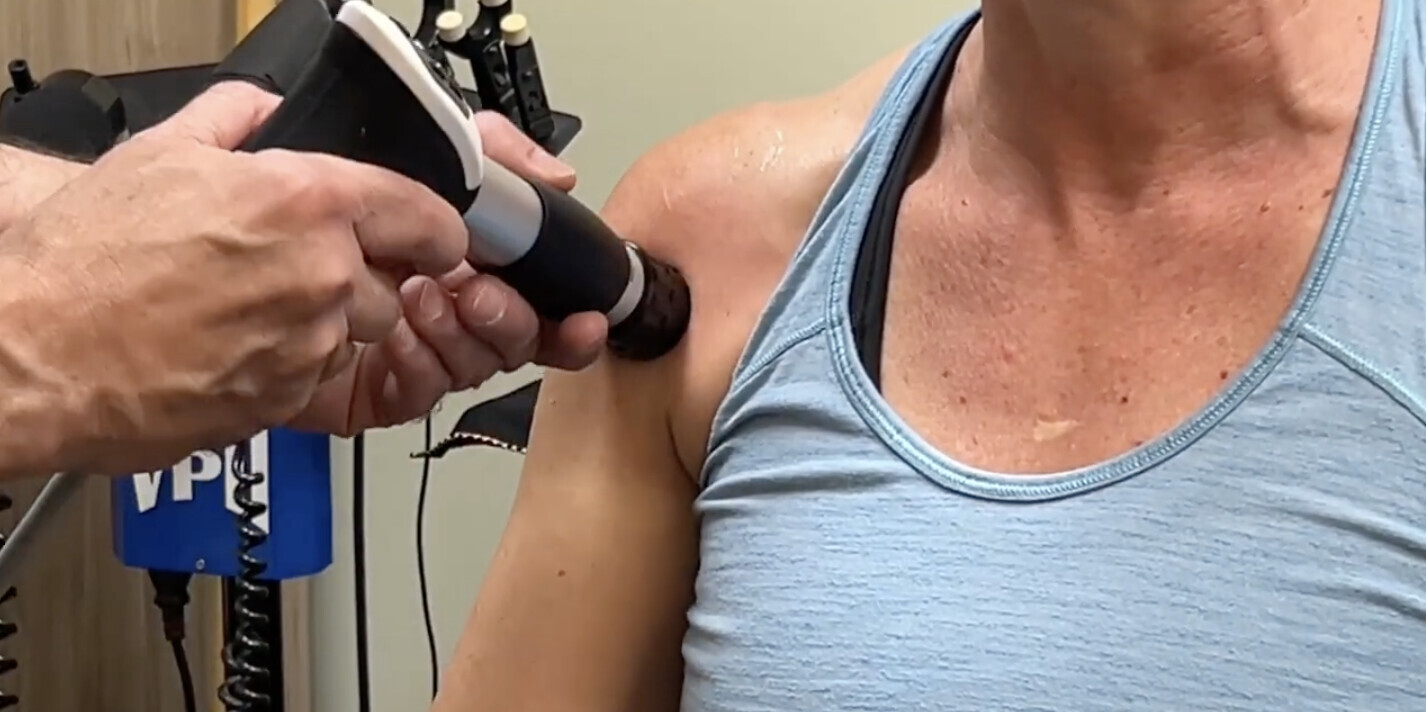
- Shockwave Therapy: For chronic issues where stubborn scar tissue or "adhesions" are the primary culprits, I utilize Radial Shockwave. This is a powerhouse treatment for breaking down long-standing conditions like Plantar Fasciitis, Tennis or Golfer’s Elbow, and persistent shoulder or low back pain.
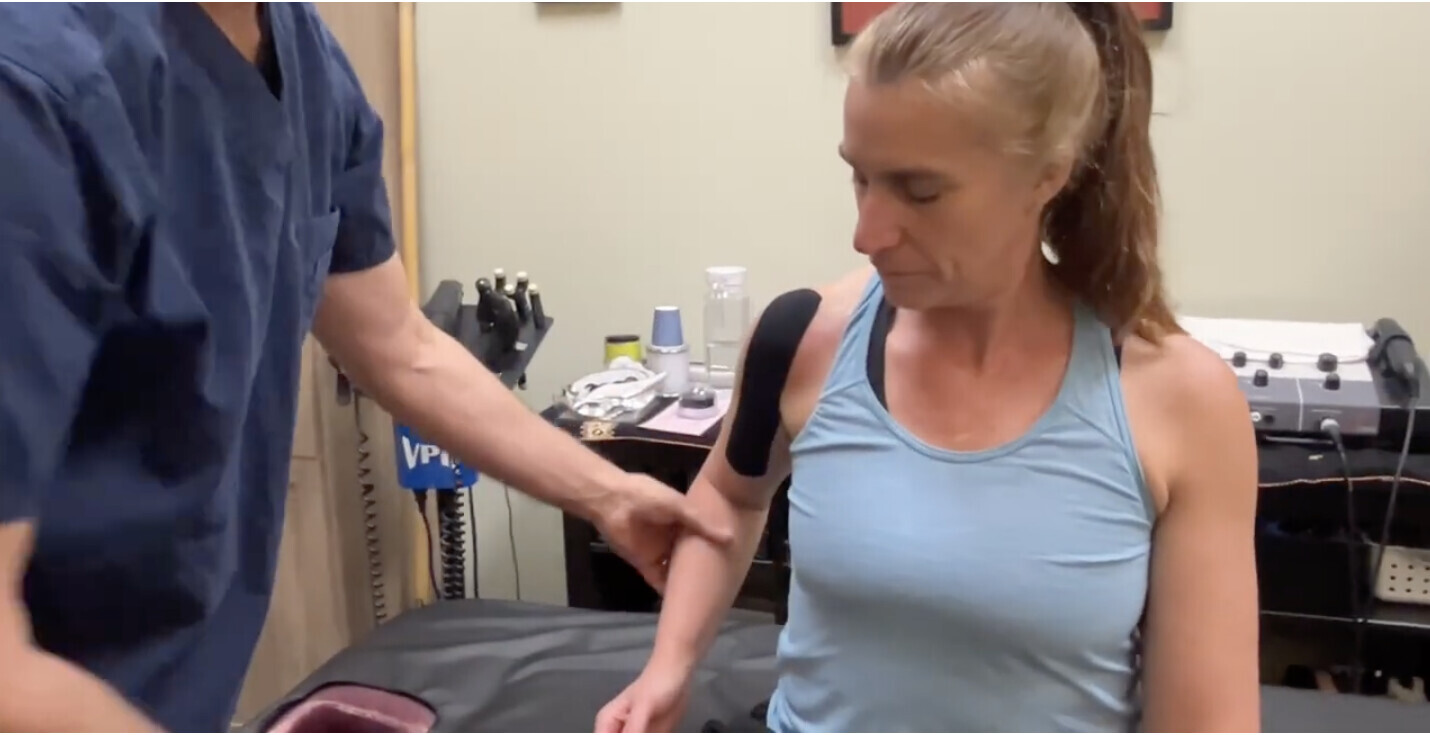
To round out the session and provide lasting support, I may finish the treatment with Rocktape (Kinesiology Tape). This helps stabilize the area and prolong the neurological "reset" we achieved during the appointment.
3. Precision Alignment: The Chiropractic Adjustment
Once we have "reprogrammed" the movement patterns and released the physical tension in the soft tissues, your body is finally primed for the Chiropractic Adjustment.
Think of the previous steps as clearing the path; now, the adjustment can be delivered with maximum precision and long-lasting impact. Because the nervous system is no longer "guarding" the area, the body accepts the correction much more easily.
I provide comprehensive care by adjusting the spine, pelvis, and extremities (shoulders, wrists, ankles, etc.). To ensure every patient is comfortable and safe, I offer a variety of delivery methods tailored to your needs:
- Manual Adjustments: Traditional, hands-on techniques for effective joint mobilization.
- Instrument-Assisted: Using electric or spring-loaded tools for a highly targeted, low-force approach.
- Table-Assisted: Utilizing pelvic drop boards or wedges to use gravity and subtle leverage for a pain-free correction.
By integrating these adjustments after the P-DTR and soft tissue work, we aren't just "cracking a joint"—we are stabilizing a newly optimized system.
4. Conclusion: A Multi-Dimensional Approach to Healing
In the attached demonstration video, you can see how I weave these advanced techniques together to create a seamless treatment session.
What sets this practice apart is the integration of these diverse "languages" of the body. By combining P-DTR with my background in Applied Kinesiology (AK), Active Release Technique (ART), and Neuro-Emotional Technique (NET), I’ve been able to unlock solutions for complex cases that standard protocols often miss.
If you are struggling with a chronic condition that hasn’t responded to traditional chiropractic, physical therapy, or orthopedic interventions, don’t lose hope. Sometimes, the "hardware" of your body is ready to heal, but the "software" just needs a reboot.
Adding these neurologically-driven tools to my toolkit has fundamentally changed the scope of what we can achieve. Whether you’re an athlete looking for peak performance or someone just looking to live pain-free, I invite you to see how this comprehensive approach can get you moving again.
5. What Can This Approach Help With?
By combining neurological resets (P-DTR), emotional clearing (NET), and targeted soft tissue work (ART), we can effectively address both common and complex conditions. This integrated method is particularly successful for:
- Chronic Pain & Tension: Persistent lower back, neck, and shoulder pain, as well as chronic tension headaches or migraines.
- Sports & Overuse Injuries: Conditions like Plantar Fasciitis, Tennis or Golfer’s Elbow, shin splints, and recurring hamstring or rotator cuff strains.
- Nerve Issues: Numbness, tingling, or burning sensations, often related to Carpal Tunnel Syndrome or Sciatica.
- Mobility & Performance: Limited range of motion, muscle weakness, or a general feeling of being "off-balance" or uncoordinated.
- Systemic & Emotional Stress: Fatigue, "brain fog," and the physical manifestations of chronic stress through Neuro-Emotional Technique (NET).
- Post-Traumatic Recovery: Lingering symptoms from old injuries, whiplash, or concussions that haven't fully resolved.